
How to Help Wildlife During Wildfire Season
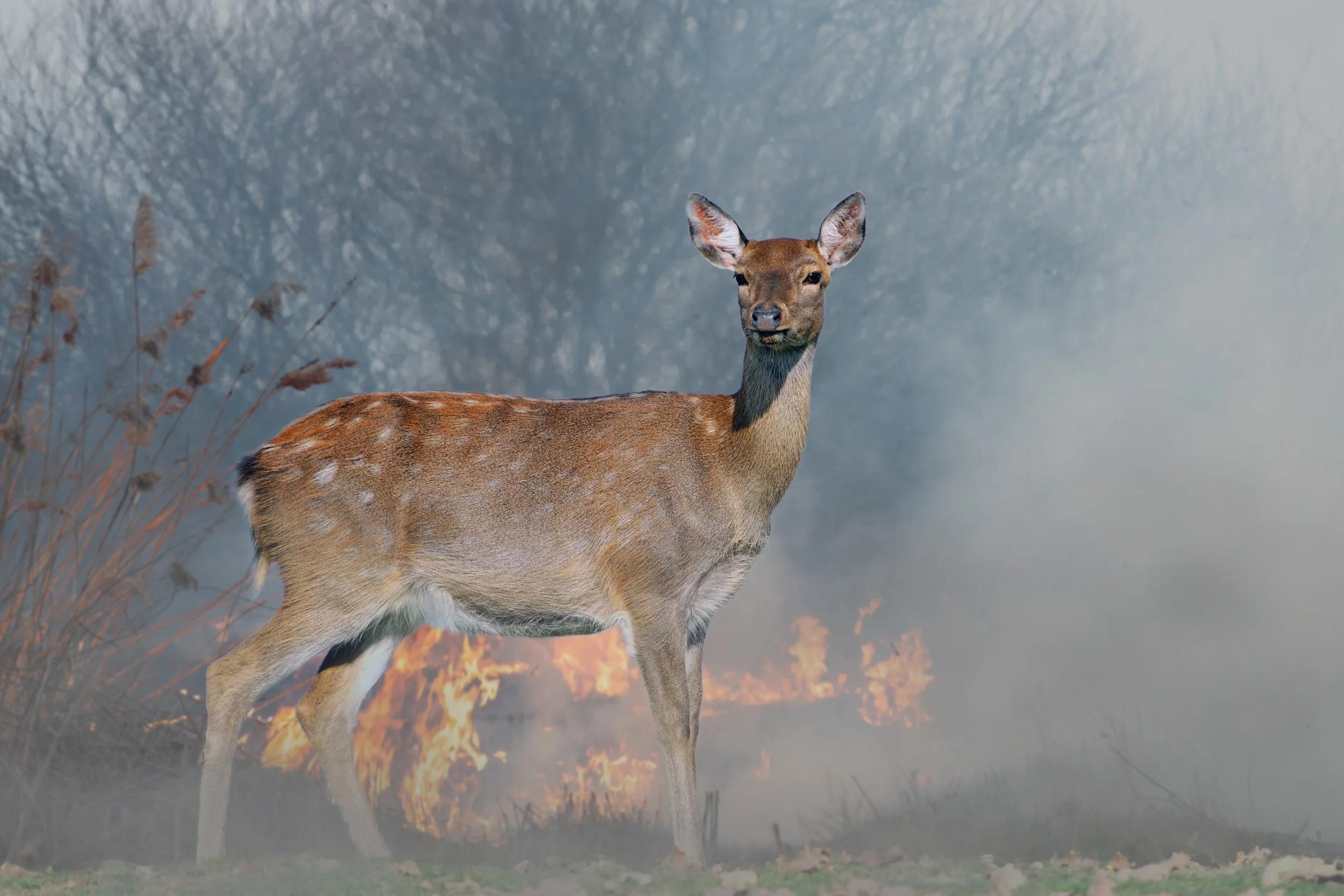
Wildfires have always been part of Oregon’s natural landscape. Many species have evolved alongside periodic burns, and in some cases, fire even plays an important role in maintaining healthy ecosystems. But in recent years, wildfires have become more intense, more frequent, and longer-lasting. These changes, driven in part by climate change, are creating new challenges for wildlife across the state.
As wildfire season arrives, it’s important to understand how these events affect wildlife and what we can do to help.
When a wildfire occurs, its impacts are immediate and often dramatic. Animals may be injured, displaced, or forced to flee their habitats in search of food, water, and shelter. In the days and weeks following a fire, wildlife may begin appearing in neighborhoods, parks, and roadways, places they don’t typically occupy. This shift isn’t unusual. As natural food and water sources are reduced or destroyed, animals are simply trying to survive.
The long-term effects of wildfire vary depending on the species and the severity of the burn. Some animals benefit from post-fire conditions, where new vegetation provides new browse opportunities. Others face significant challenges. Species that depend on mature forests, such as the Northern Spotted Owl, may experience population declines when older trees and nesting habitats are lost. Recovery for these ecosystems can take years, and in some cases, decades.
Wildfires also affect aquatic ecosystems in ways that are less visible but equally important. After a fire, rain can carry ash, debris, and sediment into nearby rivers and streams. This runoff can lower oxygen levels, increase water temperatures, and alter water chemistry, creating stressful or even lethal conditions for fish and other aquatic species. In some cases, these changes lead to fish die-offs and long-term damage to aquatic habitats.
Despite these challenges, wildlife is remarkably resilient. Many species are adapted to fire and even rely on it. Woodpeckers, for example, often thrive in burned areas where insects are abundant in dead trees. Grazing animals benefit from the flush of new plant growth that follows a fire. Certain insects, including fire-adapted beetles, are drawn to recently burned landscapes and play a role in the natural recovery process. These species help ecosystems regenerate, contributing to the long-term health of Oregon’s forests and rangelands.
While wildlife can adapt, human actions during wildfire season can make a meaningful difference. If you encounter wildlife displaced by fire, the most important thing you can do is give it space. Avoid feeding animals, as this can create dependency and increase the risk of human-wildlife conflict. Instead, consider placing a shallow dish of clean water outside, away from your home and pets, to provide temporary support during extreme conditions.
It’s also helpful to allow wildlife to move freely through the landscape. When safe to do so, temporarily opening gates or removing barriers can help animals navigate to new habitat areas. Driving cautiously, especially in smoky conditions or near burned areas, can also reduce the risk of wildlife-vehicle collisions, which often increase after fires. Keeping pets indoors or supervised is another simple way to reduce stress and danger for both pets and wildlife.
If you come across an animal that appears sick, injured, or deceased, it’s important to contact professionals who are trained to respond. You can reach out to your local Oregon Department of Fish and Wildlife office or contact a licensed wildlife rehabilitation center. Reporting these observations helps experts respond appropriately and monitor the broader impacts of wildfire on wildlife populations.
Recovery from wildfire is a long process, and it often requires coordinated efforts. Habitat restoration, conservation funding, and ongoing monitoring all play a role in helping wildlife recover and ecosystems rebuild. We work alongside state agencies and land managers to support these efforts across Oregon.
Wildfire will always be a part of Oregon’s environment, but the landscape is changing. By understanding how wildfires affect wildlife and taking simple, thoughtful actions, we can all help support the resilience of Oregon’s diverse species during one of the most challenging times of the year.
For more information on how to support wildlife throughout the year, visit www.myowf.org.
See also:
Hunting and fire danger in Oregon | Oregon Department of Fish & Wildlife
Wildfire and its impact on fish and wildlife | Oregon Department of Fish & Wildlife