American bullfrogs may seem harmless, but in Oregon's wetlands they are one of the greatest threats facing native amphibians. Originally introduced from eastern North America, these invasive frogs prey on native frogs, salamanders, crayfish, fish, and even small birds while competing with native wildlife for food and habitat. Their remarkable reproductive capacity makes the problem even more challenging—a single female can lay tens of thousands of eggs in a season, allowing populations to grow rapidly if left unchecked.
For species already struggling to recover, including the federally threatened Oregon spotted frog (Rana pretiosa), invasive bullfrogs can make survival even more difficult. The U.S. Fish and Wildlife Service identifies bullfrog predation as one of many significant obstacles to Oregon spotted frog recovery. During removal efforts, project staff even documented bullfrogs attempting to consume bats, underscoring just how opportunistic these invasive predators can be.
To help address this challenge, Oregon Wildlife Foundation provided funding support to Three Rivers Environmental and its “Targeted Bullfrog Removal in Central Oregon” project. Building on eight years of ongoing bullfrog management in the Upper Deschutes Basin, this project focuses on removing invasive bullfrogs from priority wetlands within the Little Deschutes River Subbasin, protecting habitat for Oregon spotted frogs, western toads, and other native amphibians.
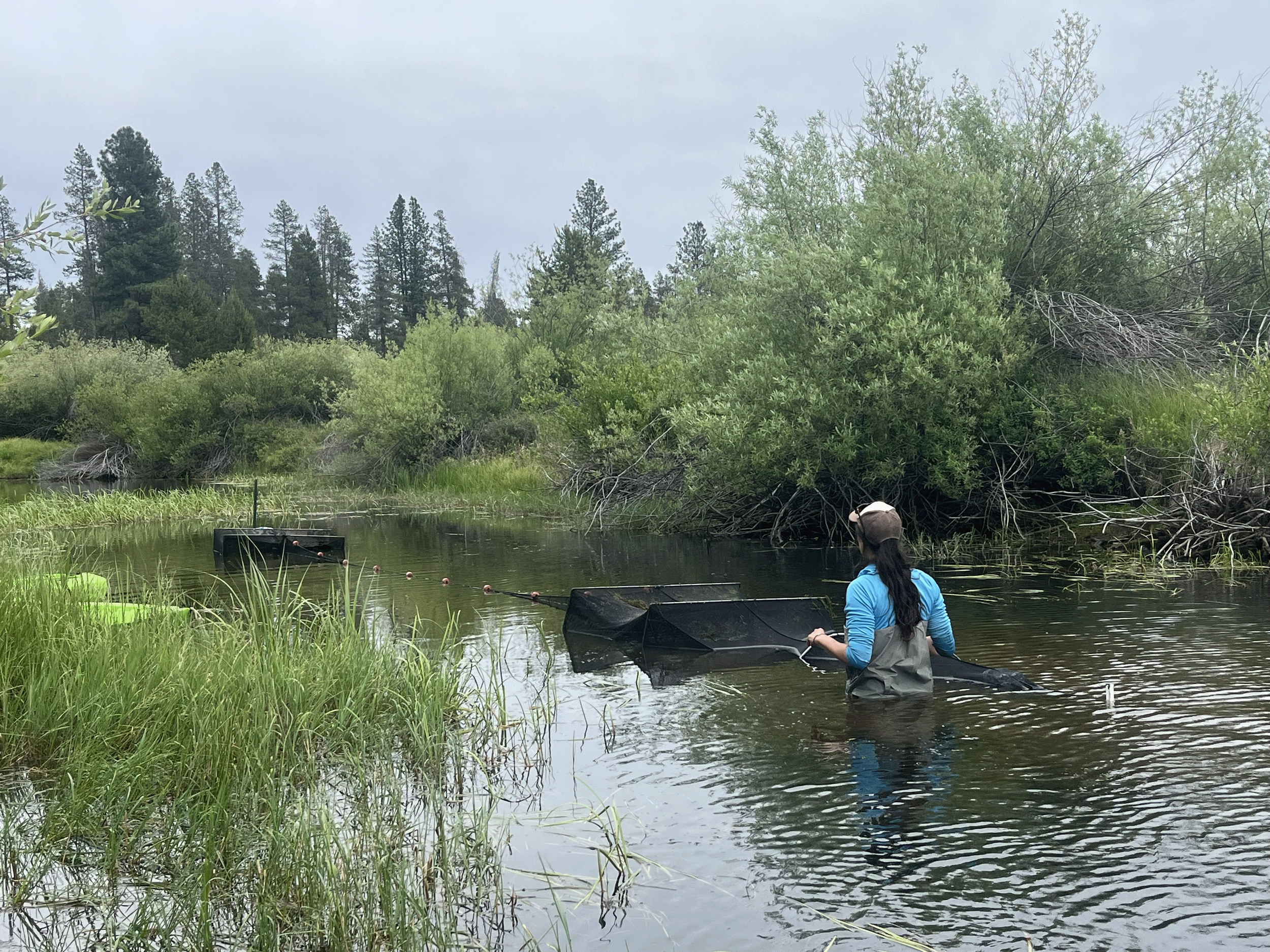
Rather than relying solely on traditional hand capture methods, the project uses specialized mini fyke nets with attached wings that funnel bullfrog tadpoles into traps. These durable, reusable nets have significantly increased capture efficiency during the larval stage, one of the most important times to reduce future bullfrog populations. In Central Oregon, bullfrogs lay eggs during the height of summer, and the resulting tadpoles typically take about a year to metamorphose into frogs. By removing tadpoles before they mature, the project provides longer-lasting conservation benefits than targeting adults alone.
Bullfrog removal is a season-long effort that targets every stage of the bullfrog life cycle. While the fyke nets are used primarily for tadpoles, crews also remove egg masses by hand, with most egg collection occurring in July, and capture juvenile and adult bullfrogs throughout the summer.
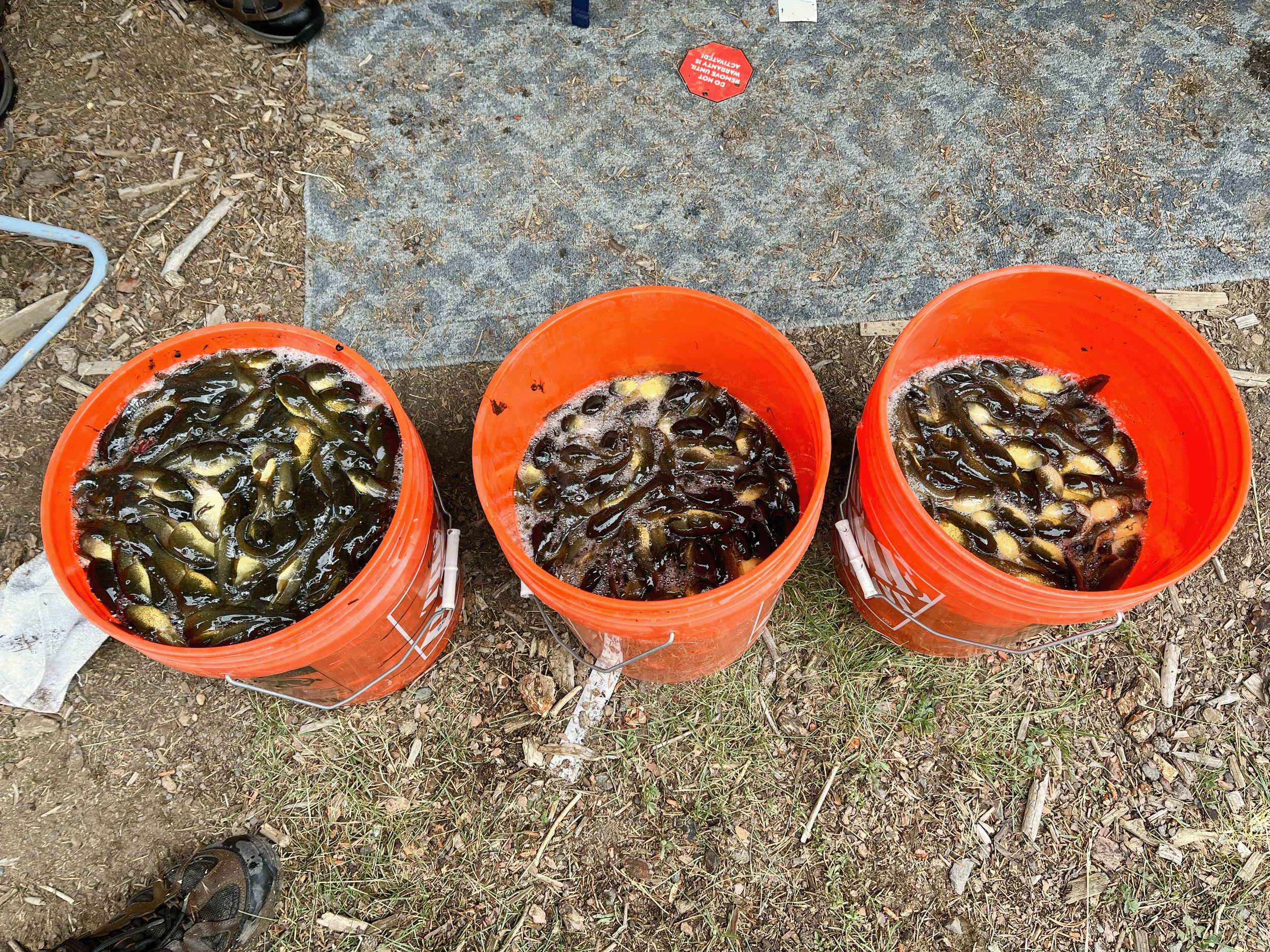
Work supported by our grant to this project began on June 25, 2026. During the first four days of net deployment, crews collected an estimated 2,100 bullfrog tadpoles. Since then, the results have continued to exceed expectations. To date, the team has removed approximately 12,000 tadpoles this season, dramatically reducing the number of young bullfrogs that would otherwise mature and reproduce.
Protecting native wildlife remains a top priority throughout the project. The fyke nets are only deployed in wetlands with high concentrations of bullfrogs and little to no Oregon spotted frog activity. The traps are checked daily, allowing any accidentally captured native animals to be released immediately. All work is conducted under an Oregon Department of Fish and Wildlife 2026 Scientific Take Permit and a U.S. Fish and Wildlife Service Native Threatened Species Recovery Permit, ensuring removal efforts are carefully coordinated with state and federal wildlife biologists.
Although this year's tadpole removal season is coming to a close as the remaining tadpoles begin metamorphosing into juvenile frogs, the project itself is far from over. Because the fyke nets are reusable, they will continue to be deployed across priority wetland sites during future field seasons as part of Three Rivers Environmental's long-term invasive species management program. The organization expects to remove at least a similar number of bullfrog tadpoles in future years, continuing to improve habitat conditions and support the recovery of Oregon's native amphibians.
Through strategic partnerships and investments in effective conservation tools, Oregon Wildlife Foundation is helping protect some of Oregon's most vulnerable wetland species. Every invasive bullfrog removed represents another step toward healthier wetlands and a stronger future for the Oregon spotted frog, western toad, and the many native species that depend on these ecosystems.
Thank you to Jodi Wilmoth, Project Manager and owner of 3 Rivers Environmental, and Tara Chapmon, invasive species biologist for the project, for the above information and photos.